27 January 2026
A NASHO reflects: 75th anniversary of National Service
14 February 2026 marks the 75th anniversary of National Service in Australia.
From 1951 to 1972, more than 280,000 young Australian men were called to undergo compulsory training in the armed services.
Although many were proud to serve their country, National Service often came at a personal cost, with more than 200 men losing their life on duty, at home or across the world in Vietnam, Malaysia, Singapore and Papua New Guinea.
David Crickmore was one of the thousands of young Aussies who served during the first National Service intake, receiving the call in 1954 when he was just 18 years old.
Being called up to National Service didn't worry me. I'd already had some experience through my time as an Air Force Cadet in high school and in the General Reserve. I just thought it was part of being Australian,” David says.
“We couldn’t drink or vote, but we could be sent overseas to war if needed."
Triumph and tragedy
He was posted to 9th Intake, No.5 National Service Unit at RAAF Laverton and commenced 154 days of training soon after – the first of two training periods with the National Service.
David describes his first day at training as “disorganised chaos” with many troops – some of them university students, apprentices or farmers – having never lived outside the family home, let alone in a different state.
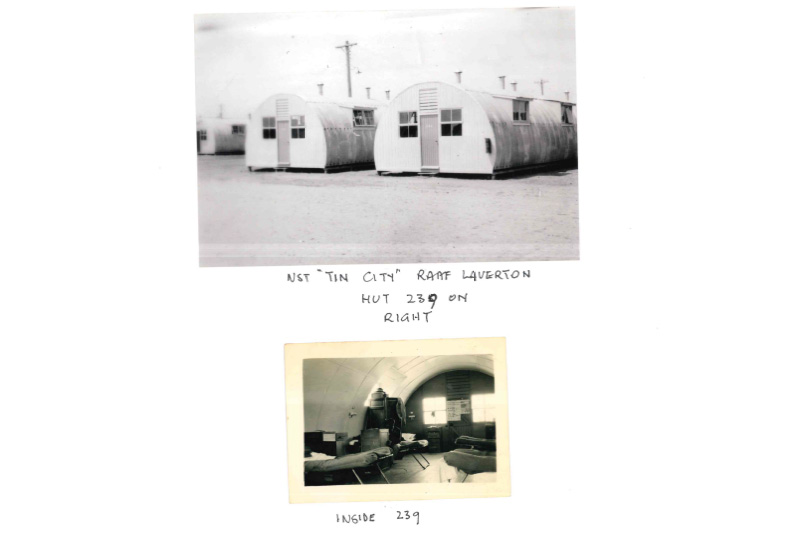
“When we arrived, there were three blankets, two sheets, a pillow and a pillowcase on every bed. And the people who hadn't made a bed before sort of looked confused as if to say, ‘What do we do with it?’”
Trainees were assigned to huts in groups of eight, each with their own bed, clothes locker, bedside table and chair. Every day they rose at 6.00am, made their bed and began a long day of drills and rifle work, physical education and specialist training such as riot control and weaponry.
During the first period of training, several recruits were selected to undergo air crew training. Among them was David’s best mate, Alan Cartledge.
“I met Alan in my first year at National Service and we palled up together. He was from Tasmania, so when I found out he was studying architecture at Melbourne University, I invited him to stay with my family in Brunswick,” David says.
“My stepmother was particularly fond of him.”
David and his family formed a close bond with Alan and were devastated when his life was tragically cut short during a training exercise in 1955. Alan was one of two pilots involved in a mid-air collision.
"[At his funeral] they fired a volley of three rounds, and when they fired the first one, that's when Alan's parents just collapsed,” David recalls.
“I had to go through all of his personal stuff at camp and at home. I packaged it up and the Air Force forwarded it on to his parents.
“Alan was very missed in our house. He was a wonderful, outgoing person.”
A royal encounter
Though deeply saddened by his friend’s passing, David was determined to “keep moving” and complete phase two of his National Service training.
“Our flight had a new drill NCO, who was great, and after a 30-minute revision of rifle drill we were back into the swing of things,” he says.
“As we could ‘disappear’ while the other two intakes were going about their activities, we became known as The Phantom Flight and had phantom badges on our overalls.”
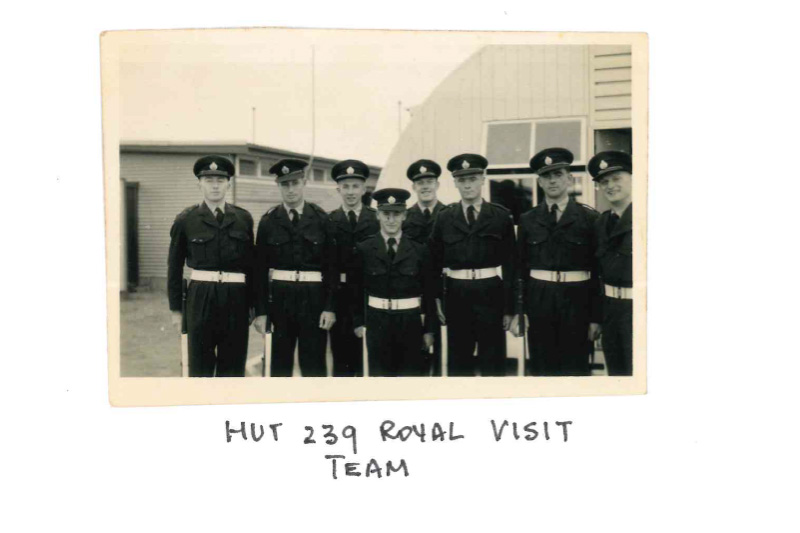
It was also during this time that Her Majesty Queen Elizabeth II visited Australia. National Servicemen were issued with blue uniforms to wear when they lined the streets of Melbourne for her arrival.
“The Queen was at Point Cook to present the RAAF with a Royal Standard and so we were lining the roads and streets of Laverton when she went over and back to depart from Aircraft Siding in the Royal Train. There must have been thousands of us,” David says.
The next chapter
On 10 August 1956, David was granted the higher acting rank of Corporal and completed his primary teacher training. He was transferred to Morwell and became a foundation member of No 26 Flight Latrobe Valley.
When David’s time in National Service ended on 21st March1955 he continued to serve in the RAAF General Reserve with the Air Training Corps.
Drawing on his own experiences in National Service, and passion for developing young people, David played a pivotal role in shaping the next generation of Air Force Cadets.
In 1967 he was appointed Chief Instructor at 11 Flight-Footscray and just a few short years later, awarded the Cadet Forces Medal for 12 years of continuous service with Cadets.
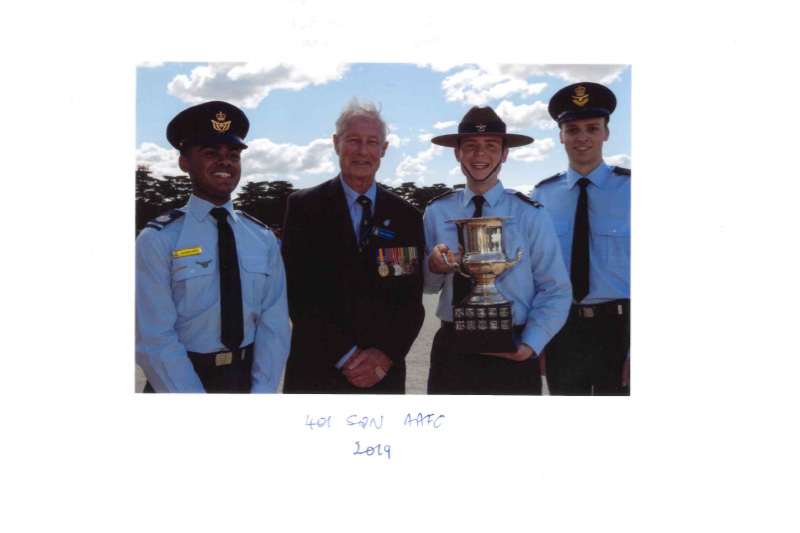
With the introduction of the new ADF Cadet Scheme in 1978 David was appointed as Commanding Officer of the 4 Wing Australian Air Force Cadets (AAFC) and progressed to become National Coordinator of AAFC.
“I must have trained hundreds of cadets during my tenure. A couple of times we were in Melbourne and blokes would come up to me and say, ‘Good morning. Don't you remember me?’, and I’d say ‘Goodness gracious. Yes, I was your Officer’," he says.
“Training is not just about Defence. It’s about the development of young people into citizens, being part of a team, doing the right thing, and helping others. That’s what’s at its core.”
When David returned from a teaching fellowship in 1982, he transitioned from General to Active Reserve and was appointed a rank of Pilot Officer at 21 Squadron.
Not keen on rushing into retirement too early, David was granted three age extensions before finally retiring from the RAAF in 1995 at 58 years old.
Looking back
It’s been 72 years since David first embarked on National Service, but the experience is still etched firmly in his memory.
“National Service gave me my own sense of commitment – that I’ve done something for my community and my country.”
David continues to stay connected to the Defence and veteran communities and is an active member of Hervey Bay RSL Sub Branch, and the Royal Australian Air Force Association.
Remembering National Service
To mark the 75th anniversary of National Service (1951-1972), the Department of Veterans’ Affairs (DVA) will be holding a National Commemorative Service at the Great Hall, Australian Parliament House, Canberra on National Servicemen’s Day, 14 February 2026.
The service will also be broadcast on radio (ABC), and online. To find out more visit the Department of Veterans' Affairs website.