
13 August 2026
The lasting legacy of the Pacific Islands Regiment
Almost every Australian has heard of the Kokoda Track, but far fewer know the story of the Papua New Guinean soldiers who fought side-by-side with Australian forces during the Battle for Australia.
Greg Ivey served with the Pacific Islands Regiment (PIR) in Papua New Guinea in 1969 and 1970 and knows all too well the sacrifice and bravery of his brothers-in-arms.
While the wartime achievements of the Indigenous soldiers of Papua and New Guinea helped stop the Japanese advance towards Australia, their contribution did not end when the guns fell silent in 1945.
Decades later, the Pacific Islands Regiment helped shape the future leaders of a nation on the path to independence.
The forgotten frontline of the Battle for Australia
During World War II, soldiers from Papua and New Guinea fought alongside Australian forces in some of the most challenging terrain on earth.
Their local knowledge, tracking skills and ability to operate in dense jungle environments proved invaluable to the Allied Forces as they pushed the Japanese back across the Southwest Pacific.
“Not only were they smart and motivated, but without them, we wouldn’t have been able to push the Japanese back. That happened because of them,” Greg explains.
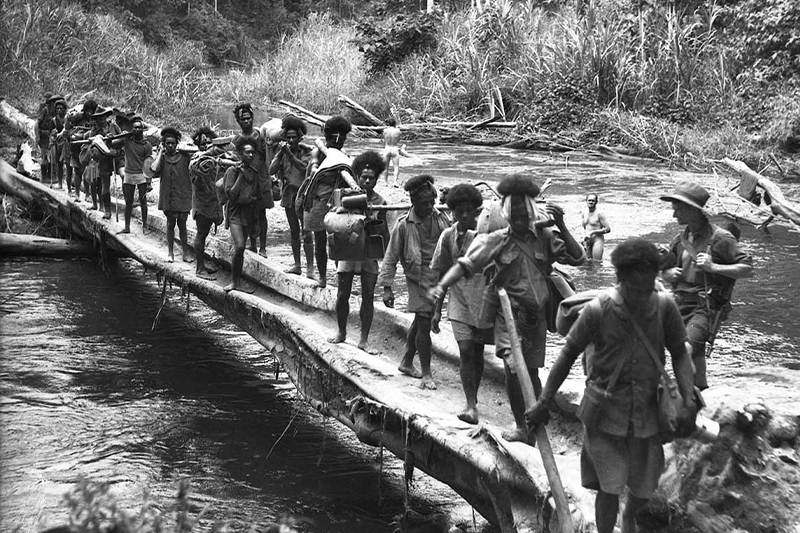
Papuan carriers and Australian troops crossing the Brown River on the Kokoda Trail, 1942. Photo credit: Australian War Memorial 027050
The strategic importance of Papua and New Guinea during the Battle for Australia cannot be overstated: located to Australia's north, these Australian territories were a crucial defensive barrier against Japanese expansion.
“Had the Japanese succeeded in taking Port Moresby, they would have been in a position to curtail Australia's contribution to the war,” Greg says.
Yet, while the wartime story is increasingly recognised through commemorations including Battle for Australia Day, Greg believes public awareness of what happened afterwards remains limited.
Training tomorrow’s leaders
Greg arrived in Papua New Guinea as a national serviceman in the late 1960s.
His posting came after the Australian Army allowed him to defer national service for one year to complete his teaching qualifications. He was then selected for a program designed to educate Indigenous soldiers and improve their opportunities for promotion.
“The Army trained me to go to Vietnam,” Greg says. “But they recognised that I had some civic qualifications in education.”
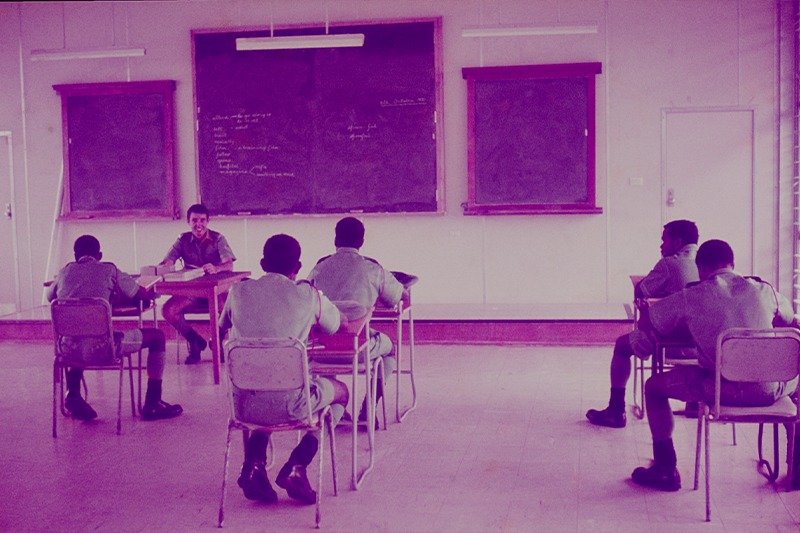
Greg teaching at Moem Barracks, 1970.
By then, the Pacific Islands Regiment – which had been re-raised in 1951 after disbanding in 1946 – had evolved from a wartime fighting force into an organisation helping prepare Papua New Guineans for greater responsibility and leadership within their own country.
The role reflected a broader transition taking place across Papua New Guinea. While the Pacific Islands Regiment remained an operational military force, it was also developing future leaders who would play an important role as the country moved towards self-government and eventual independence.
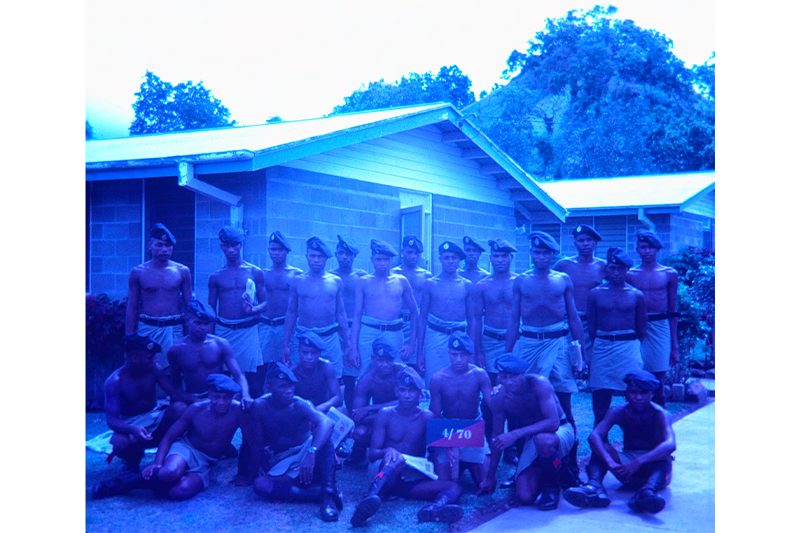
Greg’s class of Police recruits at Bomana, 1970.
Forging a future together
For Greg, daily life in Papua New Guinea offered an insight into a society undergoing significant change. Australian personnel lived and worked alongside Papua New Guinean soldiers, forging friendships that often extended well beyond military service.
The experience left a lasting impression on him, particularly the professionalism, determination and enthusiasm of the men he taught.
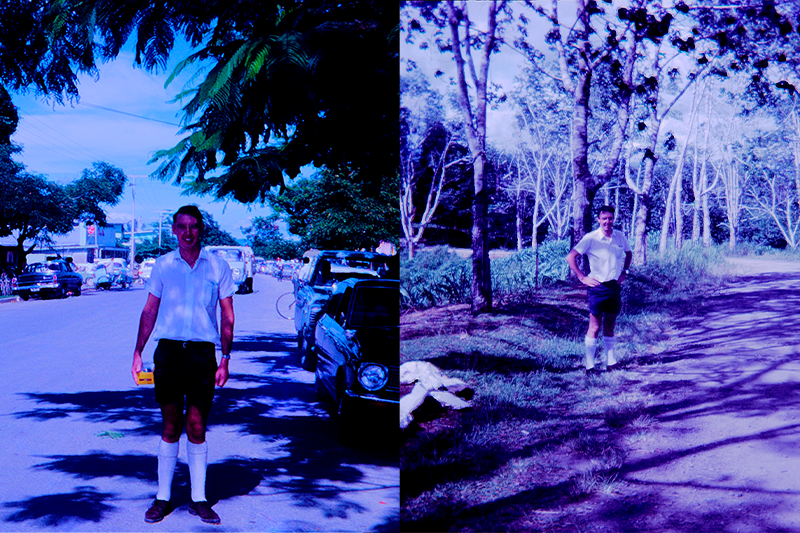
Greg shopping in Wewak, 1969; Greg at McDonald’s Corner, Port Moresby, 1970
Looking back, Greg believes the Pacific Islands Regiment played an important role not just in defending Papua New Guinea during wartime, but also in strengthening the capabilities of its people in the decades that followed.
Education, leadership development and military training became part of a much larger story about nation building and eventually led to self-governance.
“The Australian soldiers might have brought certain skills, but the Indigenous soldiers brought a level of determination and local knowledge that was invaluable. We learned as much from them as they learned from us,” Greg says.
Honouring a shared legacy
This year, as the Royal Pacific Islands Regiment marks its 75th anniversary, Greg continues to advocate for greater recognition of the men who served in the Regiment during both war and peace.
Through veterans’ associations – such as the PIB NGIB HQ PIR Association where he is the current President – newsletters and educational activities, he works to ensure younger generations understand just how close Australia came to invasion during World War II, and the role the Indigenous soldiers of Papua and New Guinea played in preventing it.
Their contribution, Greg says, deserves a permanent place in Australia's understanding of the Battle for Australia.
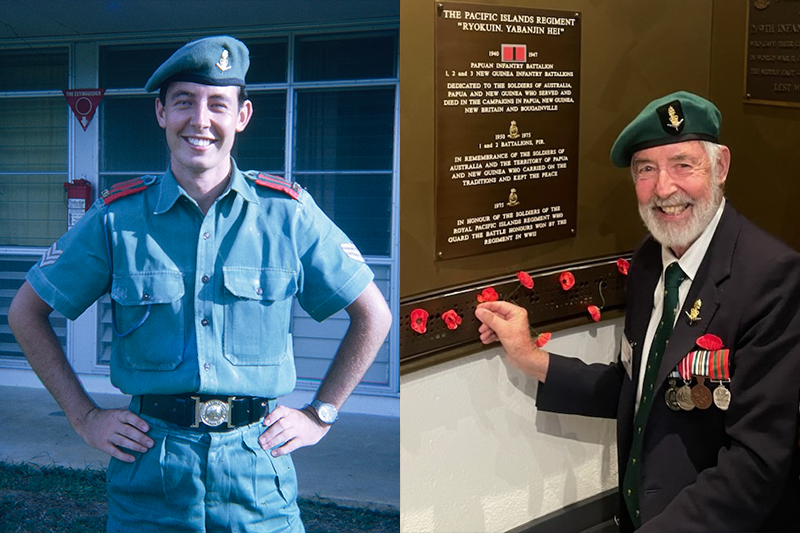
Greg at Moem Barracks, 1969; Greg at the Pacific Islands Regiment plaque in ANZAC Square, Brisbane, 2025.
When asked what he would most like Australians to remember, Greg's answer is instant.
“I would like them to remember that it was the soldiers of the Pacific Islands Regiment who, despite little training, were courageous and stood shoulder to shoulder with their Australian brothers,” he says.
More than 80 years after the Battle for Australia, the legacy of the Royal Pacific Islands Regiment remains visible on both sides of the Torres Strait. It lives not only in the wartime stories of bravery along the Kokoda Track and across the jungles of Papua and New Guinea, but also in the post-war efforts to educate, mentor and prepare a new generation of Papua New Guinean leaders.
It is a legacy measured not only by battles won, but by futures built – a reminder that service can shape nations long after conflict ends.
Battle for Australia Commemoration Service
A commemoration service for the Battle for Australia will be held in Brisbane to honour the service and sacrifice of those who defended Australian shores from invasion in the Second World War.
Details:
Wednesday 2 September 2026
11am – 12pm
Chermside Historical Precinct, 61 Kittyhawk Drive, Chermside QLD 4032